
Add SmartMe as a preferred source.
Smart Meter Roll-out
.webp)
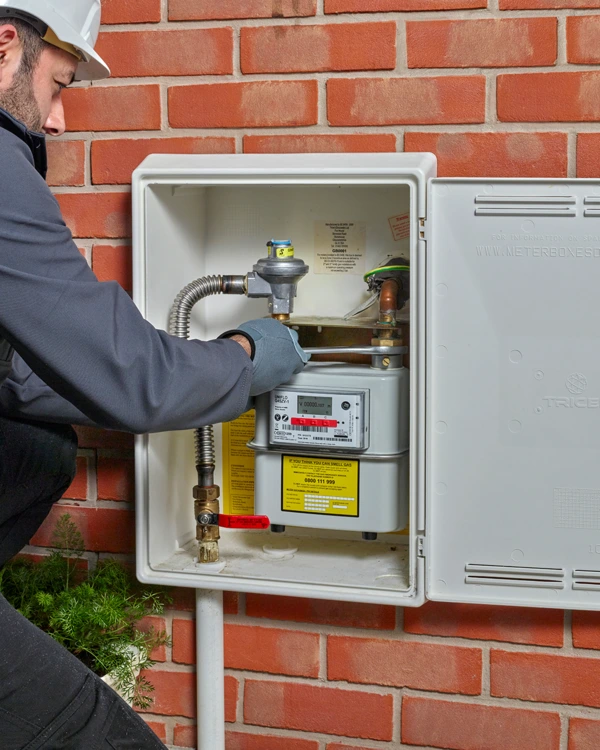
The Smart Meter roll-out is a government led initiative based on a positive business case showing customers will save energy and money once they have a Smart Meter. Smart Metering is also an important enabler for Net Zero.
Progress so far
Progress has been slow with the first deadline in 2019, and subsequent deadlines, missed. At the end of June 2026, 70% of meters were Smart and 65% were Smart in Smart mode.

- Smart (Smart mode)
-
Smart mode means the smart meter is operating with full smart functionality, sending energy use information to suppliers and displaying the information to consumers.
Advanced Meters
Advanced Meters were in effect early Smart Meters for the non-domestic market. They must, at minimum, be able to store half-hourly electricity and hourly gas data, to which the non-domestic customer has timely access and the supplier has remote access.
- Smart (Traditional mode)
-
Smart (traditional mode) means that the smart meter maintains a running total of energy used but is not operating as a Smart meter, usually for one of the following reasons:
- meters being unable to communicate with their current supplier via the WAN (Wide Area Network),
- installed meters yet to be commissioned (e.g., in new build premises).
Traditional mode is also known as dumb mode.
Responsibilities
Many organisations are involved in the Smart Meter Roll-out. The table below explains who is responsible for what.
| Organisation | Responsible for |
|---|---|
| Department for Energy Security & Net Zero (DESNZ) | The Smart Metering Installation Programme, including the high-level design of the smart metering system and the way smart meters are rolled out. It owns the policy and regulatory framework and coordinates the various organisations involved. |
| Energy suppliers | Procuring, installing and maintaining smart metering equipment in premises, engaging consumers to accept smart meters, and providing advice on how to save energy. |
| Data and Communications Company (DCC) | Maintaining and improving the central data and communications platform and network. The secure network connects smart meters to energy suppliers and other users. |
| Ofgem | Regulating suppliers' and DCC's compliance with their smart metering obligations. |
| Smart Energy GB | National engagement to ensure consumers take up and benefit from smart metering, including consumers in vulnerable circumstances. Smart Energy GB is a not-for-profit organisation, funded by suppliers. |
| Smart Energy Code (SEC) | Defining the rights and obligations of energy suppliers, network operators and other parties involved in smart metering in Great Britain. This is managed by a panel made up of supplier, electricity and gas network, DCC and consumer representatives. |
| Alt Han Company | Developing and making technology to extend the range of the Home Area Network (HAN). This is needed in a small percentage of premises (for example, in large blocks of flats with shared meter rooms) where the range of the standard smart equipment is not sufficient. Energy suppliers, via the Alt HAN Forum, are ultimately accountable for the efficient and economic delivery of Alt HAN devices. |
| Meter asset providers (MAPs) | Financing and owning both smart and traditional meters and for renting them to energy suppliers. Also responsible for some installation costs. |
| Meter and in-home device manufacturers | Manufacturing smart and traditional meters and in-home devices. |
| Meter operator providers (MOPs) | Providing services to energy suppliers to support the installation and maintenance of smart metering equipment. |
| Electricity distribution and gas network operators | Owning and operating the networks of cables, pipes and other equipment used to deliver electricity and gas to consumer premises. |
| Communications networks and data providers | Transmitting and processing data between devices and the users of the central platform service. |
| Communications hub providers | Providing the communications hub that physically connects to the electricity meter. |
Government Commitments
Progress in rolling out smart meters has been slower than the government planned, leading many changes in timescales and targets.
| Year | Government Commitment |
|---|---|
| 2008 | Set out its intention to mandate energy suppliers to install smart meters. |
| 2011 | Set out a vision for every home and small business in Great Britain to have smart meters and an intention to effectively complete the rollout in 2019. |
| 2012 | Placed a legal obligation on energy suppliers to take ‘all reasonable steps’ to install smart meters in all homes and small businesses, by 2019. |
| 2013 | Extended legal obligation deadline to 2020. |
| 2019 | Planned to introduce a four-year framework starting in 2021 giving suppliers until the end of 2024 to install smart meters in at least 85% of their consumers’ homes and small businesses. |
| 2020 | Withdrew proposed framework and deferred introducing a new framework by one year, due to the COVID-19 pandemic. |
| 2022 | Introduced the framework to the end of 2025 setting energy suppliers annual, individual installation targets “on a trajectory to 100% coverage, subject to an annual tolerance level”, set initially for 2022 and 2023. |
| 2023 | Consulted with energy suppliers and other stakeholders on achieving 80% minimum domestic smart meter coverage and 73% minimum coverage in small businesses by the end of 2025. This is part of a planned mid-point review to set targets for 2024 and 2025. |
| 2026 | Suppliers must submit rollout plans annually to install smart meters taking all reasonable steps, in 100% of domestic properties by 31st December 2030. These milestones will be from January 2027 and be binding and without tolerances. |
Roll-out Rules
The rollout of Smart Meters has been slower than required and the government has introduced a number of schemes.
In these schemes SMETS 1 meters counted towards the targets until 15th March 2019. After that date only SMETS 2 meters were counted.
All Reasonable Steps
The first government scheme to require suppliers to install smart meters was known as "All Reasonable Steps" or ARS. This meant suppliers had to forecast the number of installs for the year ahead and then they had to meet that target by using All Reasonable Steps to install at customers' premises. The suppliers' forecast was required to reach 97% of premises by the end of the scheme. The end date changed several times as the bullet points below show. A few suppliers have been fined for not achieving their own targets.
- 30 November 2012 - Legal obligation established on energy suppliers to take all reasonable steps to install smart meters.
- 16 March 2019 - Only SMETS 2 meters now count towards suppliers' target.
- 31 December 2019 - First deadline to complete.
- 31 December 2020 - Deadline extended due to slow progress.
- 30 June 2021 - Deadline extended due to Covid-19 delays.
- 31 December 2021 - Scheme ended.
The scheme allowed customers to refuse a Smart Meter when offered.
Should a supplier be willing to fit a traditional meter and have stock available then Ofgem have said it is reasonable for a supplier to charge for the installation of a conventional meter if a smart meter is refused.
New and Replacement Obligation
This obligation requires energy suppliers to use all reasonable steps to fit smart meters for all new metering points, and all meters requiring replacement through a fault or certification expiry. Customers cannot refuse a Smart Meter under this Obligation.
- 30 June 2019 - New and Replacement Obligation (NRO) established.
Post 2022 Rollout
The 'All Reasonable Steps' obligation on Suppliers finished at the end of 2021. A new 4 year scheme has been established where suppliers have to meet installation numbers. Under the new scheme the government sets an annual milestone for each supplier based on a straight-line forecast so that they eventually reach a coverage of 100%. Suppliers will be allowed a tolerance on the targets which will grow over the 4 years with a maximum tolerance of 15% in the final year.
Each year the straight line to reach 100% will be redrawn to establish new target percentages.
The scheme allows customers to refuse a Smart Meter when offered.
A failure to achieve the binding annual installation targets allowing for tolerances will be a breach of a supplier's licence.
- 1 June 2021 - Targets and tolerances for the first two years of the obligation confirmed.
- 1 January 2022 - Scheme starts. Legal obligation on energy suppliers to install smart meters to government targets.
- 31 December 2025 - Scheme ends.
The table below shows the starting points as a percentage of Smart Meters installed in premises, the target for suppliers, the minimum penetration and the tolerance allowed.
| Market | Start Year 0 31 Dec 2021 |
Year 1 31 Dec 2022 |
Year 2 31 Dec 2023 |
Year 3 31 Dec 2024 |
End Year 4 31 Dec 2025 |
|
|---|---|---|---|---|---|---|
| Domestic | Target | 61.9% | 72.1% | 82.1% | 100% | |
| Smart Meter Penetration | 49.2% | 58.5% | 64.7% | 70.4% | 74.5% | |
| Tolerance | 3.5% | 5.1% | 11.7% | 25.5% | ||
| Non-Domestic | Target | 61.7% | 70.2% | 79.9% | 100% | |
| Smart Meter Penetration | 49.0% | 55.6% | 60.1% | 65.0% | 68.7% | |
| Tolerance | 6.1% | 8.3% | 14.9% | 31.3% |
Progress by the end of 2022
Progress under this new framework in 2022 was very poor with Ofgem saying that Energy companies face “severe penalties” unless they up their game when it comes to the rollout of smart meters. Of the 49 Suppliers covered by the policy framework, 31 failed to hit their electricity targets and 23 Suppliers fell short of their gas targets. Only one of the large suppliers met their targets and this was E with a relatively small 0.6% market share.
It is a breach of their licence to fail to meet these targets so it's surprising that so many Suppliers have missed their targets again. Ofgem are in contact with all Suppliers who failed to meet the targets to set enforcement actions.
New Rules for 2026
In May 2026, the new Post 2025 Smart Metering Policy Framework came into force. It requires energy suppliers to take all reasonable steps to:
- complete the smart meter rollout by installing smart meters in all remaining domestic premises by the end of 2030,
- pre-emptively replace all legacy Communications Hubs (Comms Hub) and SMETS 1 smart metering assets by 2033, which would otherwise cease to function as a result of Wide Area Network (WAN) services ending, and
- ensure smart meters in traditional mode are back working in smart mode for consumers as soon as possible and no later than 90 days from the date energy suppliers are first aware.
As for the earlier frameworks, energy suppliers must submit annual Deployment Plans to Ofgem, in which they must provide detail of the Annual Milestones they have set for each of the above obligations and outline the activities they will undertake to meet these milestones. This time though, they must publish the Annual Milestones set in their Deployment Plans prominently on their website by no later than 1 September 2026.
As an additional incentive to get the meters working properly and to keep them working properly customer compensation has been introduced.
Number of Meters on DCC
The Data Communications Company (DCC), which was set up by the government to manage Smart Meter communications on behalf of suppliers, reported the number of Smart Meters live on 30th September 2026 as:
| SMETS Version | Number | % |
|---|---|---|
| SMETS 1 | 10,529,606 | 27% |
| SMETS 2 | 28,457,088 | 73% |
| Total | 38,986,694 | 100% |
The figures above only include SMETS 1 meters transferred to DCC, some SMETS 1 meters remain on older management systems.
SMETS 2 install rate
The rate of smart meter installations dipped severely during Covid lock down but has now recovered. However, the numbers are dropping over time as all the easy installs and willing customers have been exhausted, and technically difficult installations such as tower blocks and large houses are left. The DCC reported the average number of SMETS 2 installs per day during weekdays as 18,415 on 30th September 2026.
Installation Rules
The Consolidated Metering Code of Practice (CoMCoP) is a set of rules and minimum standards laid down by Ofgem to be followed when installing a new smart meter. This is managed by the Retail Energy Code Company.
It was developed to deliver the Licence requirement for Suppliers to follow an approved installation code of practice when installing the first smart meter for domestic and micro-business customers. The specific Licence conditions are:
- Domestic: Condition 41 of the Standard Electricity Supply Licence and Condition 35 of the Standard Gas Supply Licence
- Micro Business: Condition 42 of the Standard Electricity Supply Licence and Condition 36 of the Standard Gas Supply Licence.
All suppliers must sign up to this Schedule.
What does the Code of Practice say?
The standards in the CoMCoP ensure that the policies established through the Smart Metering Implementation Programme are met. These include offering an In-Home Display (IHD), Energy Efficiency Guidance and to provide the opportunity for the Customer to have a demonstration of the Smart Meter and IHD.
The main objective of the Smart Meter installation elements of the CoMCoP is to make sure that Consumers receives a high standard of service throughout the installation process, and know how to use, and benefit from, the smart metering equipment to improve the energy efficiency of their home.
History
Installation rules, in the form of a code of practice, have had different owners and titles over time.
- Smart Meter Installation Code of Practice (SMICoP) managed by ElectraLink
- Smart Meter Installation Schedule (SMIS) managed by the Retail Energy Code Company from 1st September 2021
- Consolidated Metering Code of Practice (CoMCoP) managed by the Retail Energy Code Company from April 2023.
Access to Meters
If an installer cannot install a new meter safely, then the supplier has the right to ask the homeowner to provide safe access to the meter at his or her expense.
You can get a quote to have the meters moved, but this is very expensive, from £400 upwards and typically about £1,200.
For example, if the meter is hidden behind a kitchen cupboard, then homeowner must arrange their own tradespeople to either remove the cupboard or provide an access panel. The moral of the story is - never make your meters inaccessible in the first place. After all you need to read them too.
Your supplier's right to have free access to their meters will always be in your supply contract, something like this:
You agree that physical or remote access to each meter or any metering equipment in your property won't be obstructed. You also agree to give us (and our agents, the gas transporter and the network operator) safe access to the meter, equipment, pipes, wires and display unit, and to let us into your property:
- In an emergency, at any time
- At all reasonable times, if we can legally. This includes access to the meter to work on it, to switch between payment methods, disconnect the supply or to remove a meter, display unit or any other related equipment.
Operating as Smart or Dumb
Many customers have noticed that their SMETS 1 Smart Meters lose functionality when changing suppliers. This is because different unlinked systems have been used in the past to manage SMETS 1 meters. When a new supplier took over a SMETS 1 meter, they often could not operate it and therefore it went "dumb" or operated as a traditional meter.
This will be addressed with most SMETS 1 meters moving to the DCC systems and becoming Smart again.
There are other reasons smart meters don't always operate as required:
- customers switching to suppliers unable to operate the meter in smart mode,
- meters being unable to communicate via the wide area network,
- installed meters yet to be commissioned (e.g. sitting in a new build).
Progress in getting all Smart Meters operating in a smart way has been very slow, with 7.6% of Smart Meters still not operating correctly. The industry and suppliers must focus on solutions for these meters now.
| Smart (smart mode) and advanced meters | Smart (traditional or dumb mode) | ||||
|---|---|---|---|---|---|
| Date | Number | % | Number | % | Total |
| 30/06/2026 | 37,451,000 | 92.4% | 3,082,000 | 7.6% | 40,533,000 |
| 31/03/2026 | 37,055,000 | 92.5% | 3,009,000 | 7.5% | 40,064,000 |
| 31/12/2025 | 36,495,000 | 92.2% | 3,077,000 | 7.8% | 39,572,000 |
| 30/09/2025 | 35,610,000 | 91.6% | 3,251,000 | 8.4% | 38,861,000 |
| 30/06/2025 | 35,004,000 | 91.2% | 3,367,000 | 8.8% | 38,371,000 |
| 31/03/2025 | 35,110,000 | 90.9% | 3,515,000 | 9.1% | 38,625,000 |
| 31/12/2024 | 33,254,000 | 90.3% | 3,591,000 | 9.7% | 36,845,000 |
| 30/09/2024 | 32,326,000 | 89.5% | 3,773,000 | 10.5% | 36,099,000 |
| 30/06/2024 | 31,866,000 | 90.2% | 3,457,000 | 9.8% | 35,323,000 |
| 31/03/2024 | 31,626,000 | 89.1% | 3,857,000 | 10.9% | 35,483,000 |
| 31/12/2023 | 29,988,224 | 88.5% | 3,906,392 | 11.5% | 33,894,616 |
| 01/10/2023 | 29,057,162 | 87.6% | 4,098,037 | 12.4% | 33,155,199 |
| 30/06/2023 | 28,065,713 | 86.8% | 4,274,943 | 13.2% | 32,340,656 |
| 31/03/2023 | 27,612,523 | 87.3% | 4,010,664 | 12.7% | 31,623,187 |
| 31/12/2022 | 26,634,183 | 87.1% | 3,944,312 | 12.9% | 30,578,495 |
| 30/09/2022 | 25,831,584 | 87.0% | 3,857,506 | 13.0% | 29,689,090 |
| 30/06/2022 | 25,056,142 | 86.9% | 3,760,906 | 13.1% | 28,817,048 |
| 31/03/2022 | 24,574,277 | 87.4% | 3,531,819 | 12.6% | 28,106,096 |
| 31/12/2021 | 23,002,787 | 84.8% | 4,117,284 | 15.2% | 27,120,071 |
| 30/09/2021 | 20,607,978 | 82.9% | 4,246,884 | 17.1% | 24,854,862 |
| 30/06/2021 | 19,671,801 | 83.0% | 4,039,727 | 17.0% | 23,711,528 |
| 31/03/2021 | 18,856,689 | 82.9% | 3,877,181 | 17.1% | 22,733,870 |
| 31/12/2020 | 18,141,217 | 82.0% | 3,994,318 | 18.0% | 22,135,535 |
| 30/09/2020 | 17,253,663 | 82.3% | 3,722,377 | 17.7% | 20,976,040 |
| 30/06/2020 | 16,578,091 | 82.0% | 3,651,290 | 18.0% | 20,229,381 |
| 31/03/2020 | 16,515,128 | 81.6% | 3,715,188 | 18.4% | 20,230,316 |
| 31/12/2019 | 15,706,298 | 81.8% | 3,501,885 | 18.2% | 19,208,183 |
| 30/09/2019 | 14,762,088 | 83.7% | 2,865,248 | 16.3% | 17,627,336 |
| 30/06/2019 | 14,151,613 | 85.5% | 2,391,576 | 14.5% | 16,543,189 |
| 31/03/2019 | 13,553,041 | 87.2% | 1,986,945 | 12.8% | 15,539,986 |
| 31/12/2018 | 12,971,863 | 88.9% | 1,612,809 | 11.1% | 14,584,672 |
These figures are published by DESNZ (Department for Energy Security and Net Zero) every quarter for the Domestic and Non-domestic markets.
We have used the data for Large Suppliers (Domestic & Non-domestic) as only this was available in every quarterly report.
Who are the Large Suppliers?
Large suppliers often have additional responsibilities compared to small suppliers, and they often have to start projects and reporting earlier than small suppliers. The large suppliers reporting in the above table are:
- British Gas
- E
- E.ON Next
- EDF Energy
- Fuse Energy
- Octopus Energy
- OVO
- Outfox the Market
- Scottish Power
- So Energy
- SSE Energy Solutions
- Utilita
- Utility Warehouse.
Check your own Smart Meter
A couple of organisations have developed web pages to access DCC and show the meter data they hold for your premises. They can tell you what type of smart meter you have and if it's working in smart mode. The tool can also tell you if your meter should work in smart mode after switching supplier.
The electricity MPAN (Meter Point Administration Number) and gas MPRN (Meter Point Reference Number) references can be found on your energy bills. Use the bottom row of digits from your MPAN.
Citizens Advice
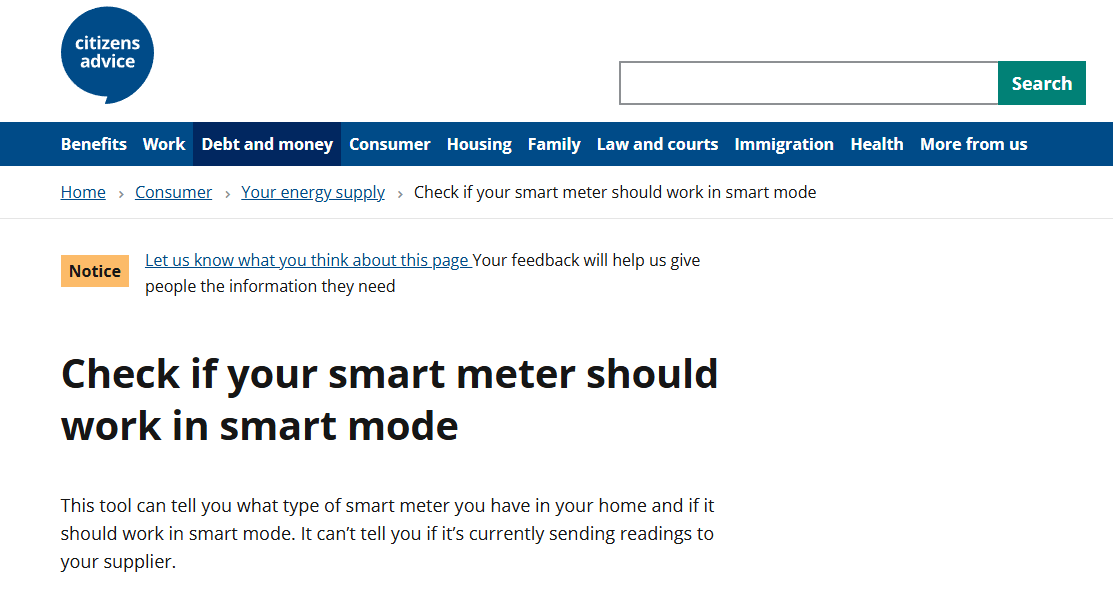
Citizens Advice have developed a Smart Meter Checker tool.
To use it you need to enter the following information:
- Electricity
- MPAN
- Postcode
- Gas
- MPRN
- Postcode
n3rgy
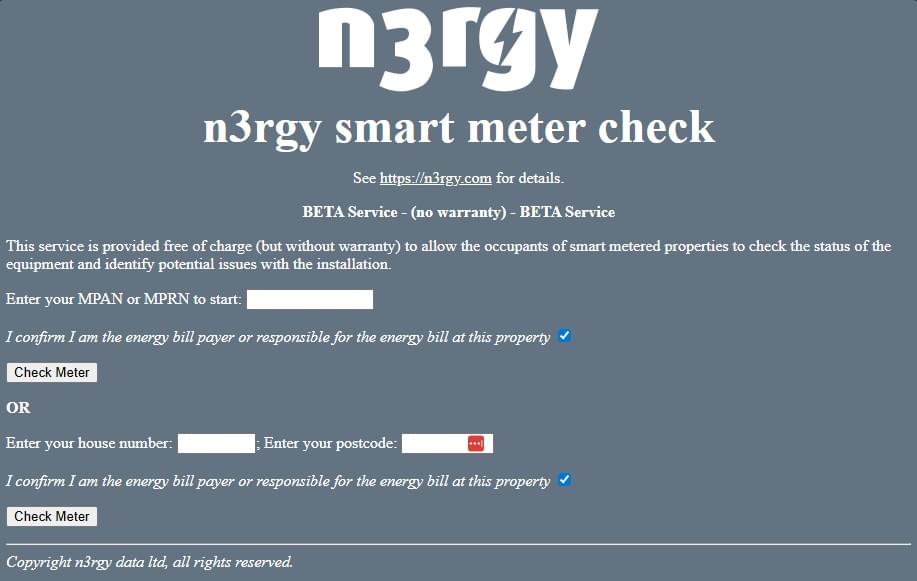
N3rgy have developed a Smart Meter Check tool.
To use it you need to enter the following information:
- Electricity
- MPAN, or
- House number and postcode
- Gas
- MPRN, or
- House number and postcode
With this tool it is best to use your MPAN and MPRN as we have found that the address function does not recognise letters in the house number such as 21A.
Other Influences on Roll-out
Smart Meters also need to be rolled out due to meters losing their accuracy over time, and for the RTS (Radio Teleswitch Service) which is shutting down in the future.
See details on these below.
Radio Teleswitch Systems
In the 1980s the Radio Teleswitch System (RTS) was introduced using a radio signal to switch on and off off-peak circuits such as those used in Economy 7 tariffs. To facilitate this service an additional device would be installed alongside the meter which would receive the Radio 4 long wave signal containing the switching instructions.
The BBC turned off the service providing the RTS signal on 27th June 2026.
Without the signal, the behaviour of meters with RTS is uncertain. Some may continue to switch between rates using stored settings while some may remain on whatever rate was in place when they last received a signal.
The solution to the RTS Shutdown is for electricity suppliers to remove radio teleswitches and install a SMETS 2 smart meter with a fifth terminal. The fifth terminal enables the heating to be switched on or off at standard fixed times of the day determined by your tariff, for example Economy 7 (E7).
Meter End of Life
Like all products meters eventually need replacing because they either fail totally, become physically damaged or start to increase the measurement error. Under these circumstances you cannot refuse a smart meter.
There are two schemes by which a supplier is notified that a meter requires replacement because it may no longer be measuring to the accuracy required.
- Electricity & Gas Acts
- Meters are given a fixed lifetime after which they should be replaced.
- Measuring Instruments Directive
- Introduced in 2006, meters under this scheme have no fixed life but are replaced when testing shows that the particular meter type is getting close to the measurement tolerance allowed.
Schedule 4 - Electricity & Gas Acts
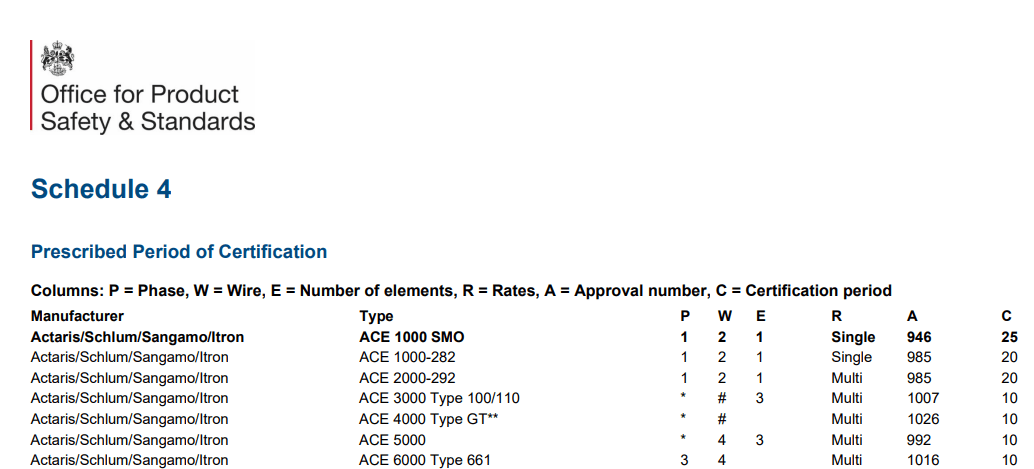
Prior to October 2006 meters were given a recognised life within which should they record energy accurately. This life can be up to 45 years, but most are either 10 or 15 years and are defined in:
Measuring Instruments Directive
In October 2006, the European Measuring Instruments Directive (MID) was implemented. Under this scheme meters are tested at the beginning and given type approval, they are not given a proscribed certification period. Instead meters are monitored using In-service Testing (IST). The Office for Product Safety and Standards (OPSS) obtains samples of meters from suppliers to regularly test meters through their life, and when a meter type no longer complies with the required limits of accuracy that type of meter must be replaced.
- Electricity meter type approval certificates Annex V
- Gas meters type approval certificates Annex IV.
Meter Replacement
When a meter is requires replacement due to Schedule 4 or In Service Testing a supplier must replace it with another meter and must use a smart meter unless there is a technical reason why this cannot be done. A customer cannot refuse a Smart Meter in this scenario. Suppliers will usually take the opportunity to replace both traditional meters with Smart Meters.
Unfortunately, some suppliers have been telling their customers that the meter is "unsafe" in this scenario to reinforce the fact that this change is compulsory and not something you can refuse. This is unnecessarily worrying; the meters are being changed to ensure they remain accurate which is in your best interests, so simply agree to have them changed, free of charge, at your convenience.
(Page updated: 2026-08-27)